
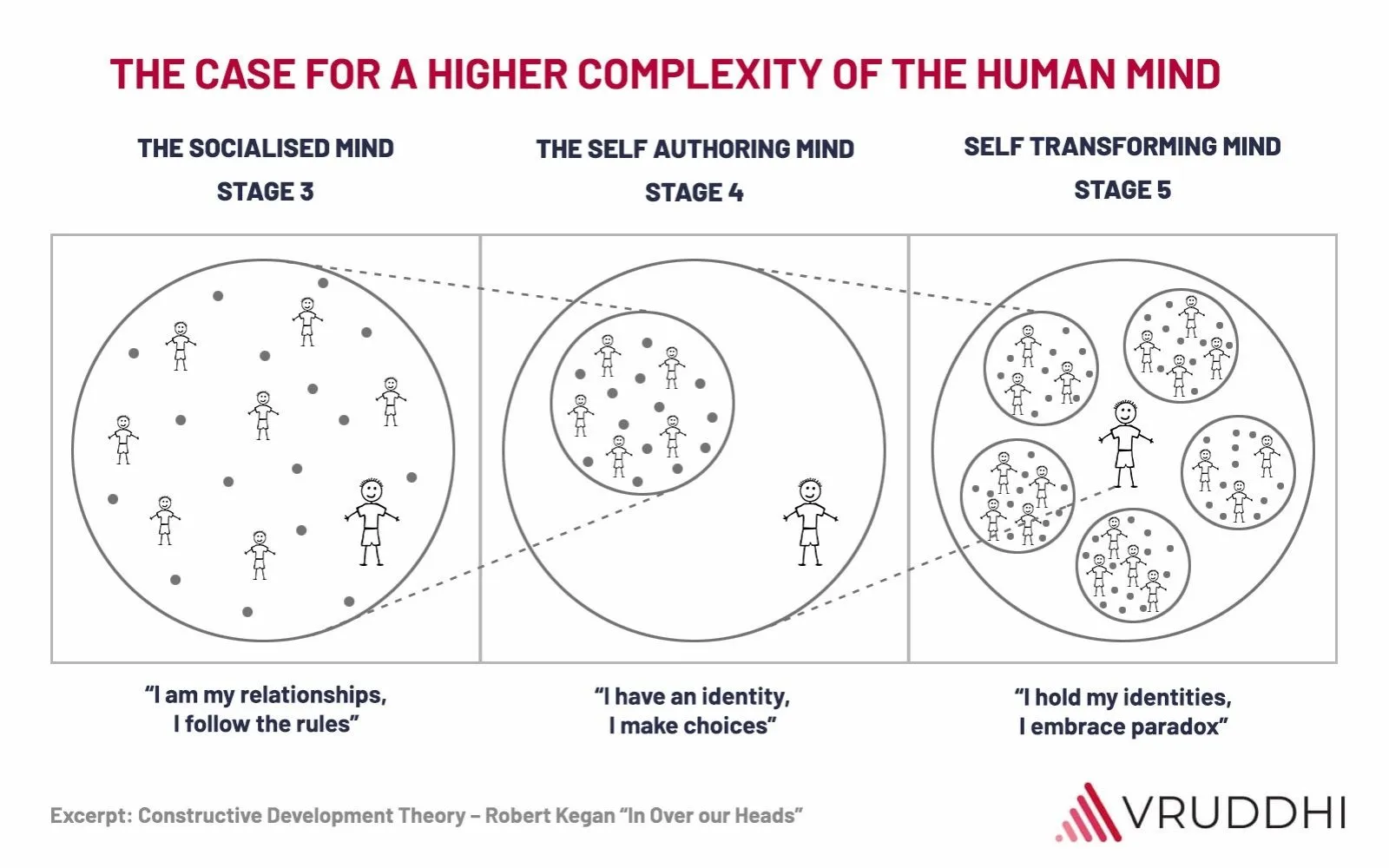
The case for a higher complexity of the human mind
Preface:
It is true that the mindset and capabilities of leader/s are critical to the growth and success of any social system including that of an organisation. Leaders set the tone, shape the culture and drive the strategic direction of the company thereby influencing all aspects of an organizations’ functioning. It is in this context; we are discussing the case for the complexity of the human mind with specific reference to the leader.
In order words, before the growth can happen for the organisation, it has to manifest in the mind of the leader and that of the leadership team.
“You cannot solve a problem with the same mind that created it” – Albert Einstein
The Challenge businesses face
One of the most significant and perhaps not fully recognized challenge is the limiting beliefs of the leader’s mindset. When leaders fail to evolve their thinking and adapt to new paradigms, they inadvertently create a bottleneck that can hinder an organization’s ability to innovate and respond effectively to changing market dynamics.
This lack of evolution can manifest as a resistance to new ideas, an overreliance on traditional strategies that may no longer be effective, or an inability to see beyond past successes. As the world around them shifts—driven by technological advancements, and evolving consumer expectations —organizations led by such leaders often struggle to remain relevant thereby creating a risk to the long-term viability of the organization.
The case for a higher complexity of the human mind:
As business environment is getting more complex and multidisciplinary, the architecture of future business models will require leaders to challenge their existing paradigms and belief systems. Problems occur whenever a gap exists between an adult’s current capacities, or mental complexity, and the psychological demands of their context (Kegan, 1994).
By using the methodology of adult development, Kegan has contributed to our understanding of how individuals move through stages of development, from more ego-centric perspectives to more complex and integrative perspectives.
Leaders will need to be able to step outside of their own ideologies or mental frameworks to take note of any limitations or defects in them and construct more comprehensive (multi-ideological, multi-framework) perspectives. They will need to transcend knowledge from multiple disciplines, sectors, and stakeholder worldviews, integrating them into larger and constantly evolving frameworks. – Robert Kegan
Real transformation involves moving through stages of development
The emphasis on Kegan’s stages of adult development is more internal – focusing on psychological development and the evolving complexity of the mind as individuals grow. While each level of development or way of knowing has its own strengths and limitations, each successive level represents growth in the capacity to organize and reflect on experience. The gradual movement individuals make from one way of knowing to another is a transformational change, a qualitative shift in how they understand themselves and the world around them.
Conclusion:
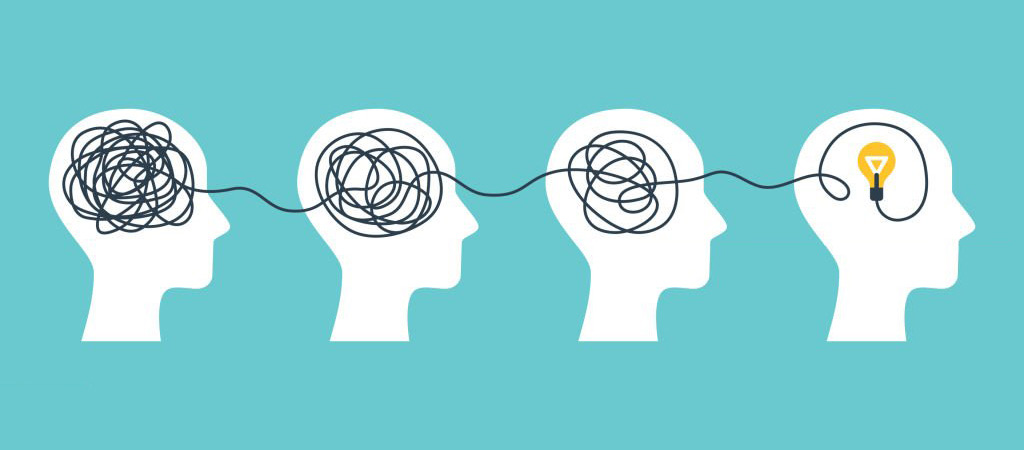
The case for a higher complexity of the human mind is about being a better version of self. As leaders progress through the development stages they create better outcomes for everyone involved.
Such leaders are better equipped to handle diverse perspectives, make informed decisions amidst uncertainty, and foster innovative solutions that can solve the challenges of today and tomorrow.